Urethane vs. PVC Cleats: What’s the Difference?
February 4, 2026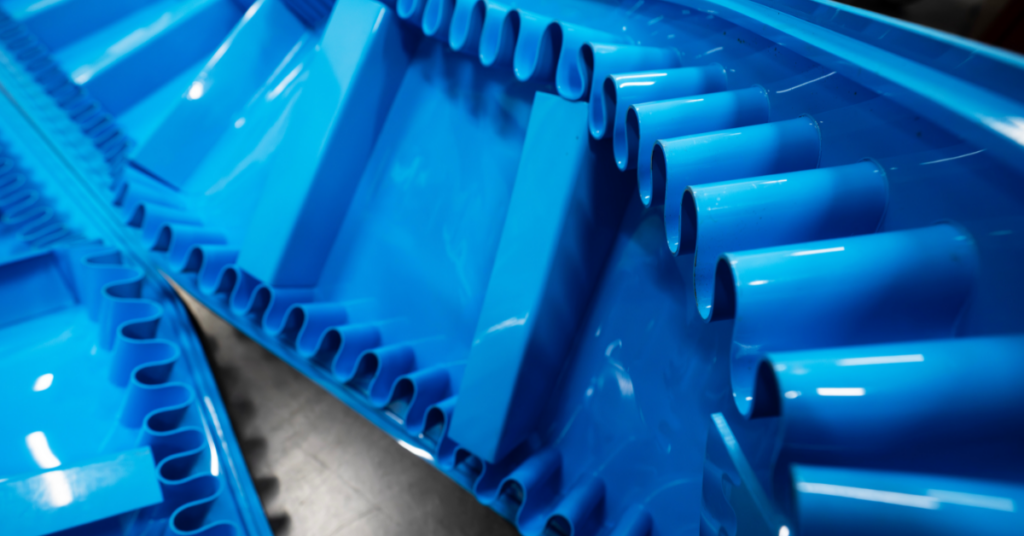
Sidewalls play a critical role in conveyor belt systems by containing material, guiding product flow, and preventing spillage—especially on inclined or high-capacity conveyors. While sidewalls may appear similar at a glance, how they are constructed and attached to the belt can significantly impact performance, cost and system design. Two common configurations are based sidewalls and baseless sidewalls. Understanding the differences can help ensure the right solution is selected for each application.
What Is a Based Sidewall?
A based sidewall is fabricated with an additional strip of material—referred to as the “based”—attached to the bottom of the sidewall. This based sidewall is then bonded to the conveyor belt using hot-air welding or industrial adhesives.
Based sidewalls are widely used because they are:
- Generally more cost-effective.
- Suitable for field installation or repairs.
- Compatible with a wide range of applications.
- Easier and faster to install.
What Is a Baseless Sidewall?
Baseless sidewalls do not include a based strip. Instead, the sidewall is directly welded to the belt using high-frequency (HF) welding. This process uses electromagnetic energy to fuse materials at the molecular level, creating a clean and integrated bond.
Baseless sidewalls are commonly selected when:
- Conveyor components (to support rollers, transitional roller and rails) must run flat on the belt surface.
- Smaller pulley diameters are required.
- Sanitary design and cleanability are priorities.
- Cleats or flights need to be positioned closer to the sidewall.
Because HF welding requires specialized equipment, baseless sidewalls are typically installed in a controlled manufacturing environment rather than in the field.
Key Differences That Impact Performance
One of the most important considerations is conveyor design. In systems where rollers or scrapers ride directly on the belt, a based sidewall may interfere with proper operation. In these cases, a baseless sidewall is often necessary.
Pulley size is another factor. Baseless sidewalls tend to be more flexible, allowing for tighter bends around smaller pulleys. Based sidewalls, which are stiffer due to the added material, typically require larger pulley diameters.
From a sanitation standpoint, baseless sidewalls offer fewer potential trap points where debris or moisture could collect. This makes them a popular choice in food processing and washdown environments.
Choosing the Right Option
The right choice depends on the application, conveyor design, environment and operational priorities. In many cases, customers already know which style their system requires—but understanding the tradeoffs can help optimize performance and longevity.
Motion Conveyance Solutions supports both based and baseless sidewall solutions, offering the flexibility and expertise to match sidewall configuration to the demands of each unique application.